

A forklift operator can work safely for years and still need refresher training before the next scheduled evaluation. A near miss, a different truck, or a change in warehouse conditions can all trigger the requirement. For employers, the key is recognizing those triggers rather than treating training as a calendar-only task.
Warehouse forklift safety training should connect the equipment an operator uses with the hazards they actually face. Think Safety Always includes warehouse forklift safety training among its training services. Understanding when refresher instruction is required helps employers plan that training around both OSHA requirements and everyday warehouse operations.
When OSHA Requires Forklift Refresher Training
Under OSHA’s powered industrial truck standard, 29 CFR 1910.178(l), employers must provide refresher training in relevant topics, including an evaluation of its effectiveness, when specific conditions arise. There is no universal annual refresher training requirement under this federal standard. Instead, the requirement responds to operator performance, equipment assignments, and workplace conditions.
The Five Refresher Training Triggers
OSHA requires refresher training when:
- An operator has been observed operating the vehicle unsafely.
- An operator has been involved in an accident or near-miss incident.
- An evaluation reveals that the operator is not operating the truck safely.
- An operator is assigned to drive a different type of truck.
- A workplace condition changes in a way that could affect safe truck operation.
These triggers matter even when an operator recently completed training. A current training record does not cancel the need to address an unsafe maneuver or a new operating hazard. Employers should also check applicable state-plan requirements and site policies, which may impose additional obligations.
What Those Triggers Look Like in a Warehouse
Unsafe operation might include traveling with an elevated load, turning too quickly, or failing to maintain a clear view of the travel path. A near miss could involve a pedestrian stepping away from a reversing truck or a load shifting without actually falling. An injury or damaged rack is not necessary for refresher training to become required.
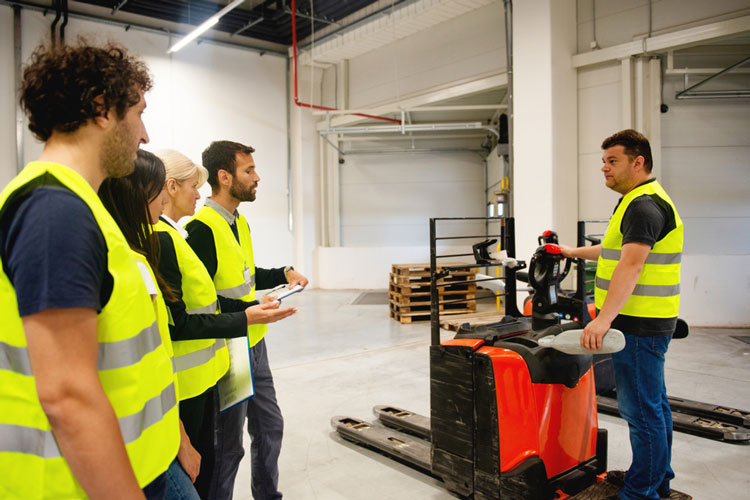
Equipment changes also deserve attention. Moving from a sit-down counterbalanced forklift to a stand-up reach truck introduces different controls, handling characteristics, and operating considerations. Training should address those differences rather than assume previous experience transfers automatically.
Workplace changes can be less obvious. Revised traffic routes, narrower aisles, new ramps, or a change in load characteristics may affect safe operation. Not every layout adjustment triggers retraining, but employers should assess whether the change creates a safety issue operators need additional instruction to manage.
Refresher Training, Evaluations, and Practical Compliance
The Three-Year Evaluation Is a Separate Requirement
OSHA requires an evaluation of each powered industrial truck operator’s performance at least once every three years. That is not the same as requiring every operator to repeat a full training course every three years.
An evaluation determines whether the operator can perform assigned work safely. If it identifies unsafe operation, refresher training is required. If an incident or another trigger occurs sooner, the employer must address it without waiting for the three-year evaluation date.
This distinction is often lost when people talk about a forklift “license” expiring. Under the federal OSHA standard, the employer is responsible for ensuring operator training, evaluation, and certification. A wallet card or course certificate alone does not establish that an operator is qualified for every truck and workplace.
When planning OSHA safety training, keep evaluation deadlines and refresher triggers visible as separate responsibilities. One is a recurring check; the other requires action when circumstances demand it.
What Effective Refresher Training Should Cover
Refresher instruction should focus on the relevant deficiency or changed condition. Following a dock-related near miss, for example, training might address dock edges, trailer movement, dockboard capacity, and the site’s loading procedures. After an unsafe turn, the focus may be speed, stability, load position, and visibility.
OSHA’s operator training framework combines formal instruction, practical training, and evaluation of performance in the workplace. A video or quiz alone cannot demonstrate safe hands-on operation. Training and evaluation must be conducted by people with the knowledge, training, and experience to train operators and evaluate their competence.
Refresher training does not automatically mean repeating every topic from the original course. Previously completed training need not be duplicated when it is appropriate to the truck and working conditions and the operator has been evaluated and found competent. The important outcome is verified safe performance, not simply additional classroom hours.
Document the Training and Address the Hazard
OSHA requires employer certification identifying the operator, training date, evaluation date, and the people performing the training or evaluation. For refresher events, also recording the trigger, topics covered, and corrective actions provides useful context for future supervision.
Training should not substitute for fixing an unsafe environment. A blind intersection may need traffic controls; damaged equipment may need removal from service. Review the underlying hazard alongside the operator’s actions. Where warehouse tasks overlap with other equipment or exposures, consider related workplace safety training services as part of the broader safety plan.
Planning Training With Think Safety Always
A reliable training plan starts with accurate information about the trucks, operators, and worksite. Think Safety Always provides warehouse forklift safety training alongside other safety training services. When arranging support, explain what triggered the need, which equipment is involved, and what practical instruction and workplace evaluation must be coordinated.
Connect with Think Safety Always to discuss your forklift safety training needs. Combining relevant instruction with timely evaluations and consistent supervision helps employers address refresher requirements before unsafe habits or changing conditions lead to another incident.
Frequently Asked Questions
How often must forklift operators complete refresher training?
Under federal OSHA rules, refresher training is triggered by unsafe operation, an accident or near miss, an evaluation showing unsafe performance, assignment to a different truck type, or a workplace change affecting safe operation. OSHA separately requires an operator performance evaluation at least once every three years.
Does a forklift near miss require refresher training?
Yes. OSHA requires refresher training in relevant topics when an operator has been involved in a near-miss incident, even if nobody was injured and nothing was damaged. The training must include an evaluation of its effectiveness.
Can an online course satisfy all forklift refresher requirements?
Online instruction can support the formal portion of training, but it cannot by itself demonstrate safe workplace operation. Refresher training must address the relevant issue and include an evaluation of its effectiveness, with practical instruction as needed.
Do experienced operators need training when switching forklift types?
Yes. Assignment to a different type of powered industrial truck is a refresher training trigger. Instruction should address the relevant equipment differences. Appropriate prior training does not need to be repeated if the operator has been evaluated and found competent.