

A forklift can make warehouse work faster and more efficient, but only when the operator, equipment, and surrounding work area are prepared for the task. Effective forklift safety is not limited to passing an initial course. It depends on practical training, consistent supervision, routine inspections, and safe decisions during every shift.
The following seven tips can help warehouse managers and operators strengthen training and reduce avoidable risks around powered industrial trucks.
Why Warehouse Forklift Safety Training Matters
Warehouse conditions can change quickly. Pedestrians enter aisles, loads vary in size, trailers arrive at docks, and temporary obstructions may affect visibility. Training should prepare operators to recognize these changing conditions rather than simply memorize equipment controls.
A complete program should combine formal instruction with hands-on practice and an evaluation in the operator’s actual working environment. Employers should also provide refresher training when unsafe operation is observed, an incident or near miss occurs, equipment changes, or workplace conditions create a new hazard. Broader OSHA safety training can help supervisors connect forklift procedures with the facility’s overall safety responsibilities.
Seven Tips for Safer Forklift Operations
1. Make Training Specific to the Equipment
Not every forklift operates the same way. Controls, stability, steering, attachments, visibility, and load limits may differ between models. Operators should be trained on the equipment they will actually use and understand the information shown on its data plate.
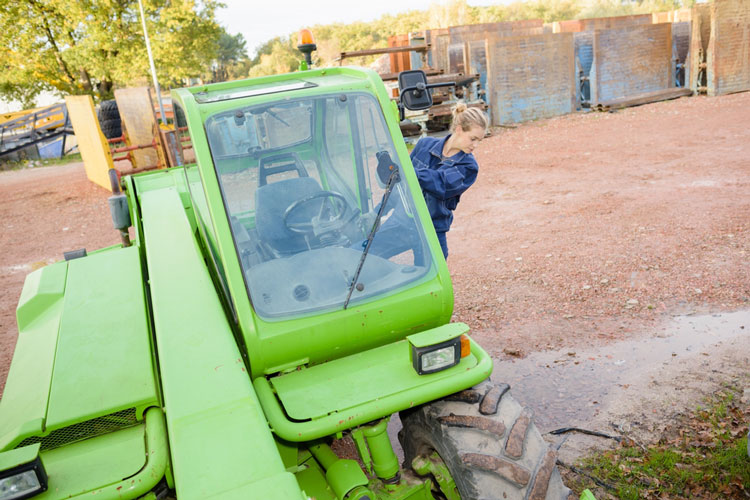
Training should also address the warehouse environment. Narrow aisles, ramps, loading docks, cold storage areas, and outdoor surfaces create different operating challenges. Employees who may use forklifts on construction sites or uneven ground should receive appropriate rough terrain forklift training before operating that type of equipment.
2. Require a Pre-Operation Inspection
A pre-operation inspection gives the operator an opportunity to identify problems before movement begins. The inspection should follow the manufacturer’s guidance and the employer’s established procedure. Operators should know how to document defects and who must be notified.
Common inspection points include:
- Tires, forks, mast components, chains, hoses, guards, warning devices, steering, brakes, controls, seat belts, batteries or fuel systems, and visible fluid leaks.
- The data plate and attachments, confirming that they are present, readable, compatible, and suitable for the planned load.
A forklift with a safety-related defect should be removed from service until it has been properly evaluated and repaired by an authorized person.
3. Control Speed and Maintain Visibility
Operators should travel at a speed that allows them to stop safely for the current conditions. Wet floors, blind corners, crowded aisles, ramps, and unstable loads may require a slower pace. Posted speed limits are important, but they do not replace sound judgment.
Operators should look in the direction of travel and keep a clear view of the route. If a load blocks forward visibility, traveling in reverse may be appropriate when conditions permit. Extra care is necessary at intersections, doorways, and other areas where pedestrians or equipment may appear unexpectedly.
4. Handle Every Load Within Rated Capacity
Before lifting, the operator should consider the load’s weight, stability, shape, and center of gravity. Loads should be positioned securely, with forks spaced appropriately and inserted as fully as practical. An attachment can change the forklift’s capacity, so operators must rely on the equipment’s updated data plate rather than assumptions.
Loads should remain low while traveling and should not be raised or lowered while the forklift is moving unless the operating procedure specifically allows it. Sudden turns, stops, or elevated loads can affect stability and increase the chance of a tip-over or dropped material.
5. Separate Forklifts and Pedestrians
Warehouse traffic planning is an essential part of forklift safety. Marked walkways, stop points, mirrors, signs, barriers, and designated crossing areas can help make movement more predictable. Pedestrians should understand that an operator’s field of view may be restricted even when eye contact appears possible.
Operators should use horns where required, slow down near blind areas, and never assume a pedestrian has noticed the forklift. Supervisors should correct both driving and pedestrian behavior when established traffic rules are ignored.
6. Use Extra Caution at Docks and Trailers
Loading docks combine fall hazards, moving vehicles, tight spaces, and changing surfaces. Before entering a trailer, operators should confirm that it is secured according to site procedures and that the trailer floor can support the forklift and load. Dock plates or levelers should be correctly positioned and rated for the task.
Operators must maintain a safe distance from dock edges and watch for gaps, damaged flooring, poor lighting, or trailer movement. These site-specific hazards should be included in warehouse forklift safety training rather than left for employees to discover during normal operations.
7. Reinforce Training Through Observation
Training is most effective when supervisors reinforce it on the warehouse floor. Short observations can reveal habits such as speeding, turning with raised loads, skipping inspections, or parking incorrectly. Feedback should be prompt, specific, and focused on the correct procedure.
Near misses and changes in warehouse layout should also be reviewed as learning opportunities. Refresher instruction allows operators to correct risky habits before they contribute to an injury, equipment damage, or disrupted operations.
Build Forklift Safety Into Every Shift
A reliable program makes safe operation part of daily warehouse routines. Employers should verify that operators are authorized, inspections are completed, pedestrian controls remain visible, and damaged equipment is reported. Operators should also know how to park safely, lower the forks, neutralize controls, set the parking brake, and follow site procedures before leaving equipment unattended.
Think Safety Always provides warehouse forklift safety training as part of its safety training services. Organizations seeking help with operator instruction and workplace-specific forklift practices can contact Think Safety Always to discuss their training needs. A practical, consistent approach helps operators understand not only how to use a forklift, but also how to recognize hazards and make safer choices throughout the shift.
Frequently Asked Questions
Who is allowed to operate a forklift in a warehouse?
Only employees who have received appropriate training and have been evaluated and authorized by their employer should operate a forklift. Training should match the type of equipment and the conditions where it will be used.
When does a forklift operator need refresher training?
Refresher training may be needed when unsafe operation is observed, an operator is involved in an incident or near miss, an evaluation identifies a problem, equipment changes, or workplace conditions introduce new hazards.
What should an operator check before using a forklift?
The operator should follow the required inspection procedure and check items such as tires, forks, mast components, controls, brakes, steering, warning devices, restraints, fluid leaks, the data plate, and installed attachments. Safety-related defects should be reported before operation.
What should warehouse forklift safety training include?
Training should include formal instruction, hands-on practice, and an evaluation in the workplace. It should cover equipment controls, inspections, load handling, stability, pedestrian traffic, docks, ramps, parking, and site-specific hazards.