
Forklifts are essential in warehouses, distribution centers, construction sites, and manufacturing facilities. They increase efficiency, speed up material handling, and support heavy-load operations. However, without proper training and awareness, they also present serious hazards. Understanding and applying Forklift Safety Best Practices is critical for protecting workers, preventing costly accidents, and maintaining regulatory compliance.
Each year, thousands of workplace incidents involve powered industrial trucks. Most of these events are preventable when operators follow structured procedures and employers reinforce a strong safety culture. This guide outlines the most important practices every forklift operator must know to keep themselves and others safe on the job.
Why forklift safety matters more than ever
Modern workplaces move faster than ever, with tighter schedules and higher productivity demands. In these environments, shortcuts can easily replace caution. Forklifts operate in shared spaces with pedestrians, narrow aisles, and heavy loads that shift balance quickly. A single mistake can cause equipment damage, injuries, or even fatalities.
Implementing Forklift Safety Best Practices not only protects workers but also reduces downtime, insurance claims, and repair expenses. Safe operations support smoother workflows and a more reliable work environment.
Pre-operation inspection is non-negotiable
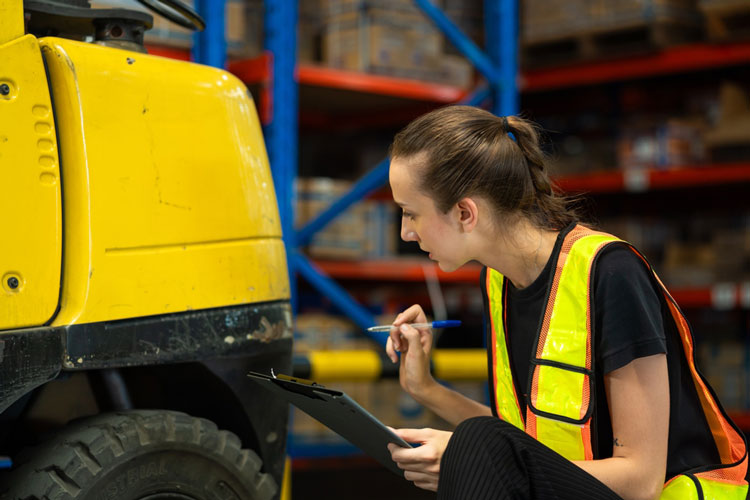
Every shift should begin with a thorough inspection of the forklift. Operators must check brakes, steering, tires, forks, fluid levels, lights, and warning devices. A quick walk-around can identify leaks, worn parts, or mechanical issues before they become dangerous failures.
Skipping inspections increases the risk of equipment malfunction during operation, which can lead to loss of control or dropped loads.
Understand load capacity and stability
Forklifts are designed with specific load limits. Exceeding those limits compromises balance and increases the risk of tipping. Operators must know the rated capacity of their equipment and consider load weight, shape, and center of gravity.
Keeping loads stable, secured, and evenly balanced helps prevent shifts that could cause rollovers or dropped materials.
Maintain clear visibility at all times
Poor visibility is a common factor in forklift incidents. Operators should always look in the direction of travel and ensure their view is unobstructed. If a load blocks forward visibility, driving in reverse may be necessary.
Using mirrors, warning lights, and horns helps improve awareness in busy environments where pedestrians may be present.
Control speed and avoid sudden movements
Forklifts are not built for high-speed travel. Quick turns, abrupt stops, or sharp maneuvers can destabilize the load and the vehicle. Smooth, controlled movements are essential to safe operation.
Operators should adjust speed based on floor conditions, load type, and surrounding traffic to maintain control at all times.
Use proper lifting and lowering techniques
Correct fork positioning is essential for safe lifting. Forks should be spaced appropriately and fully inserted under the load before lifting. Loads should be raised only as high as necessary and tilted back slightly for stability during transport.
Lowering loads slowly and carefully prevents sudden shifts or impacts.
Keep a safe distance from edges and ramps
Operating near loading docks, ramps, or elevated surfaces requires extra caution. Forklifts can tip if driven too close to an edge or if ramps are approached at improper angles.
Maintaining safe distances and using controlled speeds reduces the risk of falls or rollovers.
Stay alert to pedestrians and other vehicles
Warehouses and job sites often involve mixed traffic. Operators must stay alert to foot traffic, blind spots, and crossing zones. Sounding the horn at intersections and reducing speed in congested areas helps prevent collisions.
Workers on foot should also follow safety protocols, but operators carry the primary responsibility for safe maneuvering.
Wear appropriate personal protective equipment
Seat belts, safety shoes, high-visibility clothing, and other PPE play a vital role in reducing injury severity. Seat belts are especially important, as they keep operators within the protective zone if a tip-over occurs.
Consistent PPE use reinforces a culture where safety is treated as a priority rather than an option.
Never allow unauthorized riders
Forklifts are designed for one operator unless equipped with an approved passenger seat. Allowing riders on forks or other surfaces creates serious fall hazards and increases liability.
Only trained and authorized personnel should operate or ride on forklift equipment.
Commit to ongoing training and refresher education
Even experienced operators benefit from periodic refresher training. Work environments change, equipment is updated, and new hazards emerge. Continuous education keeps operators aware of updated Forklift Safety Best Practices and reinforces safe habits.
Employers should schedule regular evaluations to ensure skills remain sharp and procedures are followed correctly.
Building a safety-first culture
Safety is not just about individual behavior; it depends on workplace culture. Supervisors must model safe practices, enforce rules consistently, and encourage reporting of hazards without fear of punishment.
When safety becomes part of daily operations rather than an occasional reminder, incidents decrease and productivity improves.
How Think Safety supports forklift safety
Think Safety specializes in workplace safety training and compliance solutions designed to reduce risk and improve operational standards. Their forklift safety programs provide practical instruction, hands-on guidance, and up-to-date best practices to help operators and employers maintain safe work environments. By partnering with Think Safety, organizations gain the tools, knowledge, and support needed to implement effective Forklift Safety Best Practices and protect their workforce.
Frequently Asked Questions
How often should forklift operators receive refresher training?
Operators should receive refresher training every three years or sooner if workplace conditions change or unsafe behavior is observed.
What is the most common cause of forklift accidents?
Tip-overs, often caused by overloading, sharp turns, or unstable surfaces, are among the most common incidents.
Are daily inspections required?
Yes, forklifts should be inspected before each shift to ensure safe operating conditions.
Why is seat belt use so important?
Seat belts keep operators inside the protective frame during tip-overs, reducing the risk of severe injury.